
Foundation Crack Repair in Knoxville, TN
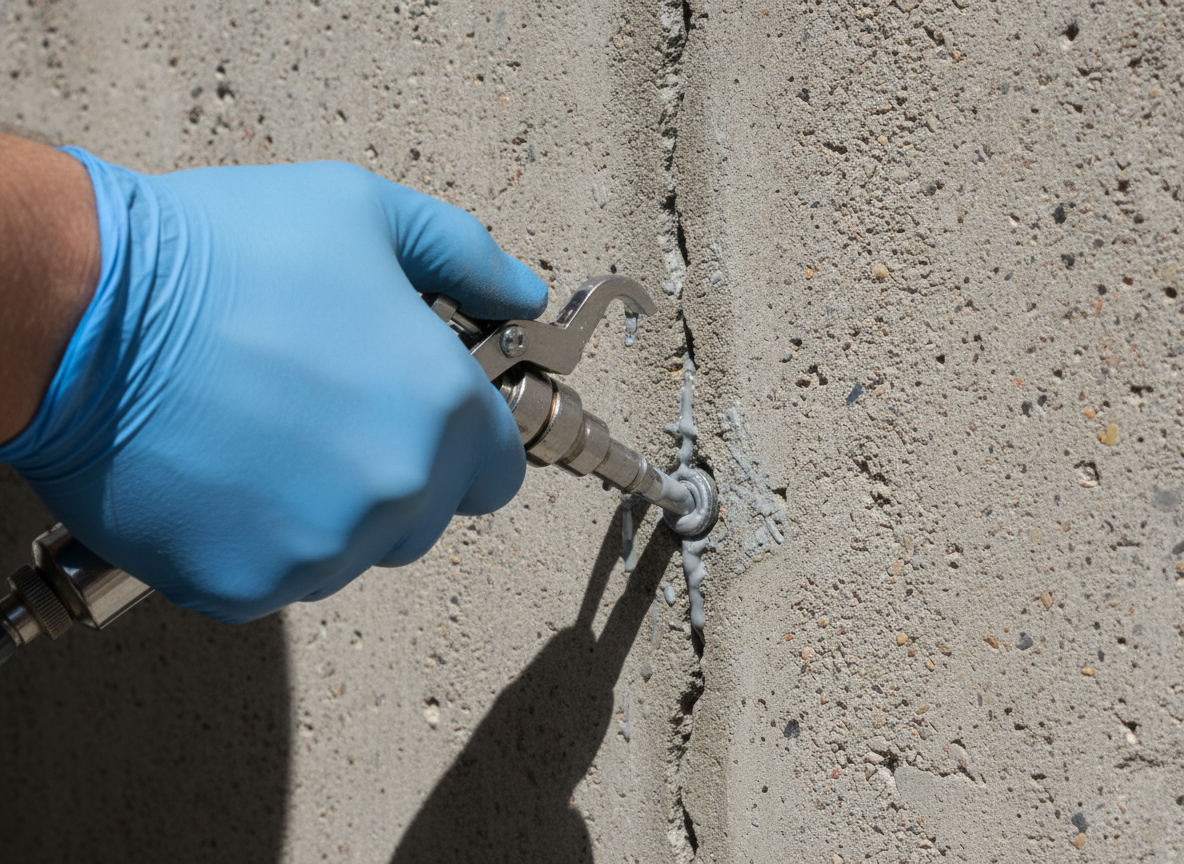
Epoxy and polyurethane injection that seals foundation cracks from the inside out and stops water intrusion at the source — not just a surface patch.
What's Included
Not every crack in a foundation wall means the structure is failing — hairline vertical cracks from normal concrete curing are common and often cosmetic. What matters is the type, direction, and width of the crack, and whether it's actively letting water through. A surface patch of hydraulic cement or caulk might look fine for a season, but it doesn't address a crack that's still moving or actively leaking, which is why injection is the standard professional fix.
Epoxy injection is used for structural cracks that need real strength restored to the wall, while polyurethane injection is better suited to active water leaks since it expands and seals even in damp conditions. If a crack keeps reopening after a repair, or you're seeing several cracks alongside sticking doors or sloping floors, that combination usually points to real settling rather than a cosmetic crack — our foundation repair page covers that scenario, and a free inspection will tell you which one you're actually dealing with.
- Epoxy injection for structural cracks
- Polyurethane injection for active water leaks
- Exterior crack sealing
- Crack monitoring for ongoing movement
Frequently Asked Questions
Is every foundation crack something to worry about?
No — thin, vertical hairline cracks from normal curing shrinkage are common and often not urgent. Horizontal cracks, stair-step cracks in block or brick, or cracks wider than a quarter-inch are the ones worth a professional look.
Epoxy or polyurethane — what's the difference?
Epoxy creates a rigid, high-strength bond and is used when structural integrity needs to be restored. Polyurethane stays flexible and expands on contact with water, which makes it the better choice for actively leaking cracks.
Can I just fill a crack myself with caulk?
A surface product might slow a leak temporarily, but it doesn't bond through the full depth of the wall the way an injection does, and it won't address whether the crack is still moving. It's a short-term patch, not a repair.
How do I know if a crack is getting worse?
Watch for the crack widening, new cracks branching off it, or matching cracks appearing in drywall or brick above it. We can also install a simple crack monitor during an inspection to track movement over time.
Worried About a Crack or Sloping Floor?
Get a free, no-obligation foundation inspection from Knoxville Foundation Repair Pros today.